
Every year, from late August to early October, our inquiry inbox changes noticeably.Buyers are preparing for Christmas campaigns, retail launches, or year-end promotions. Most messages sound similar:
“The design is already finalized.”
“We just need production.”
“Timing is tight, but the order is confirmed.”
This period is also when we refuse more projects than at any other time of the year.
Not because demand is low — but because once requests are evaluated from a manufacturing reality, some orders carry risks that cannot be solved by experience or goodwill alone.
For a metal tin box supplier, saying “yes” too quickly often creates problems that only appear months later, when products are already shipped or already on shelves.
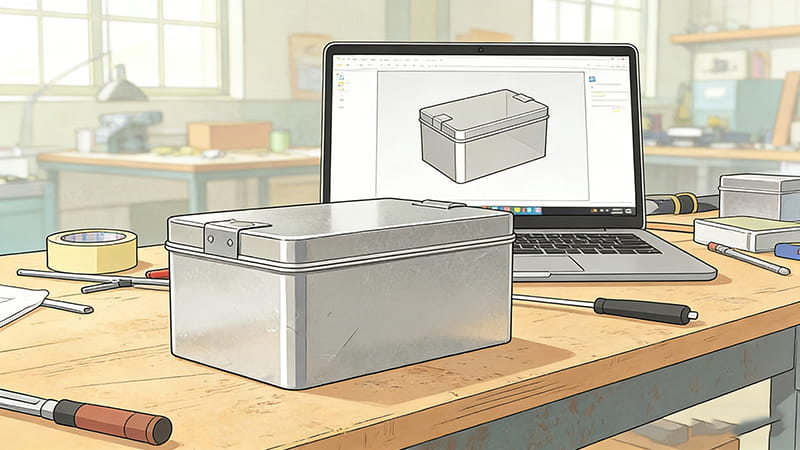
One of the most common misunderstandings we encounter is the belief that a finished drawing equals a production-ready product.
In practice, many designs include:
These issues rarely show up in visual mockups. They appear after thousands of units, when defect rates start climbing.
From a tin box factory perspective, this is not about aesthetics — it is about process stability.
Accepting such projects means accepting unpredictable quality, higher scrap rates, and delivery pressure.
What usually works better:
We often suggest a short manufacturing feasibility review before finalizing the design. Small structural adjustments at this stage usually prevent much larger problems later.
Another frequent situation involves fixed launch dates.
Buyers ask whether molds can be completed “quickly” or whether production can start immediately after sample approval. What is often overlooked is that tooling is not linear.
Custom tins, especially those with new structures, require:
When these steps are rushed, the risk is not delay — it is permanent tooling flaws that affect every future unit.
As a tin box manufacturer & supplier, we decline projects where schedules leave no room for verification.
What usually works better:
Allowing additional time for tooling trials and structural testing almost always shortens the total project timeline by reducing rework and corrections later.
Some projects appear simple until the intended use is clarified.
We occasionally receive inquiries for:
In these cases, the challenge is not production capacity but regulatory responsibility.
A custom tin box supplier cannot ignore where and how a product will be sold. If compliance paths are unclear, accepting the order puts both sides at risk.
What usually works better:
Clarifying end-use markets and compliance requirements early allows the structure, coating, and testing process to be aligned from the start.
Another category involves highly customized requests combined with very small quantities.
These projects often require:
Tooling, setup, and testing costs do not scale down with order size. When expectations and volume are misaligned, quality usually becomes the compromise.
Refusing such orders is not about pricing strategy — it is about outcome predictability.
What usually works better:
Phasing the project — starting with a pilot order or selecting existing tooling — often helps buyers reach the same design goals more efficiently.

Some buyers expect the factory to “adjust during production.”
From experience, unclear parameters almost always lead to:
Manufacturing teams need fixed standards to ensure consistency. When too much is left open, rework becomes inevitable.
This is another quiet reason why we refuse certain projects.
What usually works better:
Locking key specifications — even at a basic level — creates a shared reference point that protects both the buyer and the supplier during production.
Refusing an order does not mean rejecting cooperation. It means protecting predictability.
Suppliers who accept every project may appear flexible at first, but inconsistent quality, unstable delivery, and compliance issues eventually surface.
Buyers who understand why a metal tin box supplier declines certain projects often become long-term partners. They finalize designs earlier, plan timelines realistically, and build packaging that can scale without surprises.
Over the past few years, buyer priorities have shifted. Price still matters, but manufacturing judgment now plays a larger role.
As packaging structures become more complex and regulations tighter, factories are increasingly expected to evaluate risks before production begins — not after problems appear.
In the near future, the most reliable tin packaging suppliers will not be those who say “yes” the fastest, but those who help buyers understand what makes a project ready for production — and what does not.
Obtenga la información más reciente y ofertas especiales


 Soporta red IPv6
 Español
 English
 Français
 Deutsch
 Português